ServicesDrywall Finishing
Drywall Finishing in Brooklyn
We tape, coat and sand new or repaired board until the seams, screw heads and corners vanish under paint. You get the finish level, the coat count and every cost factor in writing before any compound gets mixed.
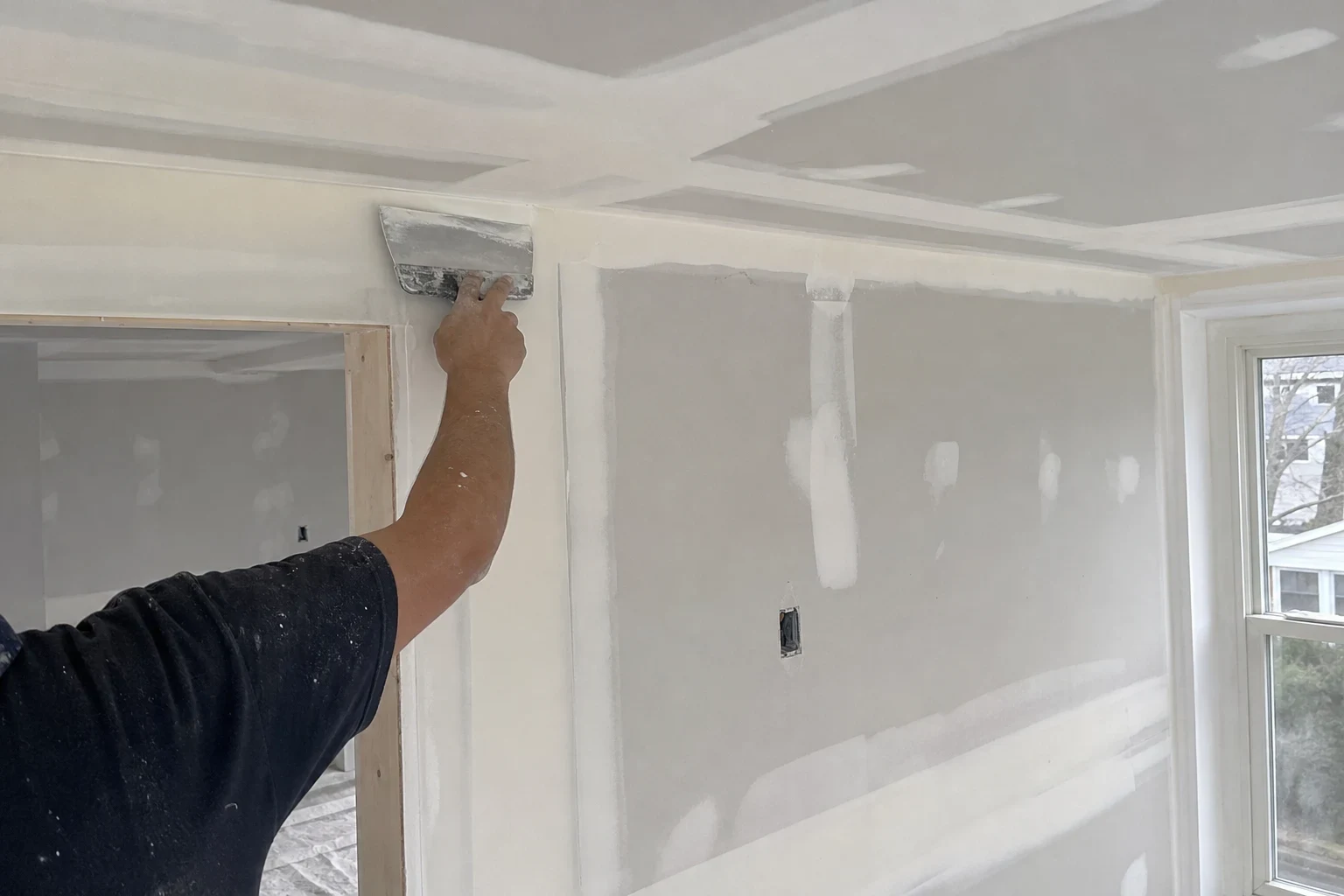
What drywall finishing covers
Hung board is only half a wall. Every seam, screw head and outside corner has to be taped and built up with joint compound in thin coats, then sanded flat so the joints don't show once paint goes on. That work is finishing, and it decides whether a wall looks smooth or shows ridges and dimples under a ceiling light.
The industry describes finishing in levels from 0 to 5. Level 4 means tape, two coats over joints and fasteners, and sanding, which suits flat or eggshell paint in most rooms. Level 5 adds a thin skim coat over the entire surface, which you want under semi-gloss paint, in rooms with strong side light from windows, or on long hallway walls where any flaw catches the eye. We tell you which level fits your room and why, and the written scope names it so there is no debate later.
We finish board we hang ourselves through our drywall hanging service, and we also pick up where another crew or a renovation left off.
What the finishing work covers
- Joint taping
- Flat seams and inside corners get paper tape embedded in compound, since paper holds up against cracking better than mesh on long joints. Joints that need added strength get mesh with setting-type compound.
- Outside corner bead
- We install metal or paper-faced bead on outside corners, set it straight and coat it so each edge shows as a single clean line. Paper-faced bead stands up better where furniture tends to knock the corner.
- Fill coats and finish coats
- Every coat is spread thinner and wider than the one under it and feathered out so the joint has no hump. Deep fills get setting compound, which hardens through a chemical reaction rather than by drying, so it shrinks less.
- Level 5 skim coat
- If the job needs it, we roll or trowel a thin layer across the entire wall so the paper face and the compound have the same texture.
- Sanding and light check
- Walls are sanded with fine-grit screens, then checked with a work light held low and at an angle, which reveals flaws you would not catch in ordinary light.
- Dust control and cleaning
- Floors get covered, doorways get sealed with plastic and we vacuum throughout, so the work area comes back to you clean.
Signs your walls need finishing
Joint lines visible through paint
Seams that show after painting mean the compound went on too thin or was not feathered well. Another finish coat and a sanding take care of it before you repaint.
Popped nails and dimpled screws
A line of round bumps or small craters means the fasteners are showing. Each one has to be reset and covered with two coats.
Tape that cracks or bubbles
Lifting or split tape was usually bedded with too little compound. Painting over it will not help; it needs to be cut out and taped again.
Waves showing in window light
Shadows rippling across a wall beside a window mean the surface needs a skim coat. In older brownstones and row houses, you often see this where new board joins old plaster.
Untaped board left after a renovation
Walls that were hung but never taped need every step, from the first tape to the final sanding.
How a finishing job runs
- 1
Look at the walls and write the scope
We walk the rooms, measure the square footage and note the board type, corners and lighting. You get a written quote that states the finish level, coat count and what is excluded.
- 2
Protect the room
Floors get covered, doorways get plastic and vents get sealed so dust stays in the work area.
- 3
Tape and coat
We tape and bed first, then come back for fill and finish coats. Each coat needs time to dry, so finishing usually spans several days rather than one.
- 4
Sand and check
After the last coat, we sand, inspect with a raking light and touch up anything that shows.
- 5
Prime-ready handoff
We leave the walls ready for a primer, which seals compound and paper to the same absorbency so the paint doesn't flash. If you need small areas blended in, our paint touch-ups service covers that.
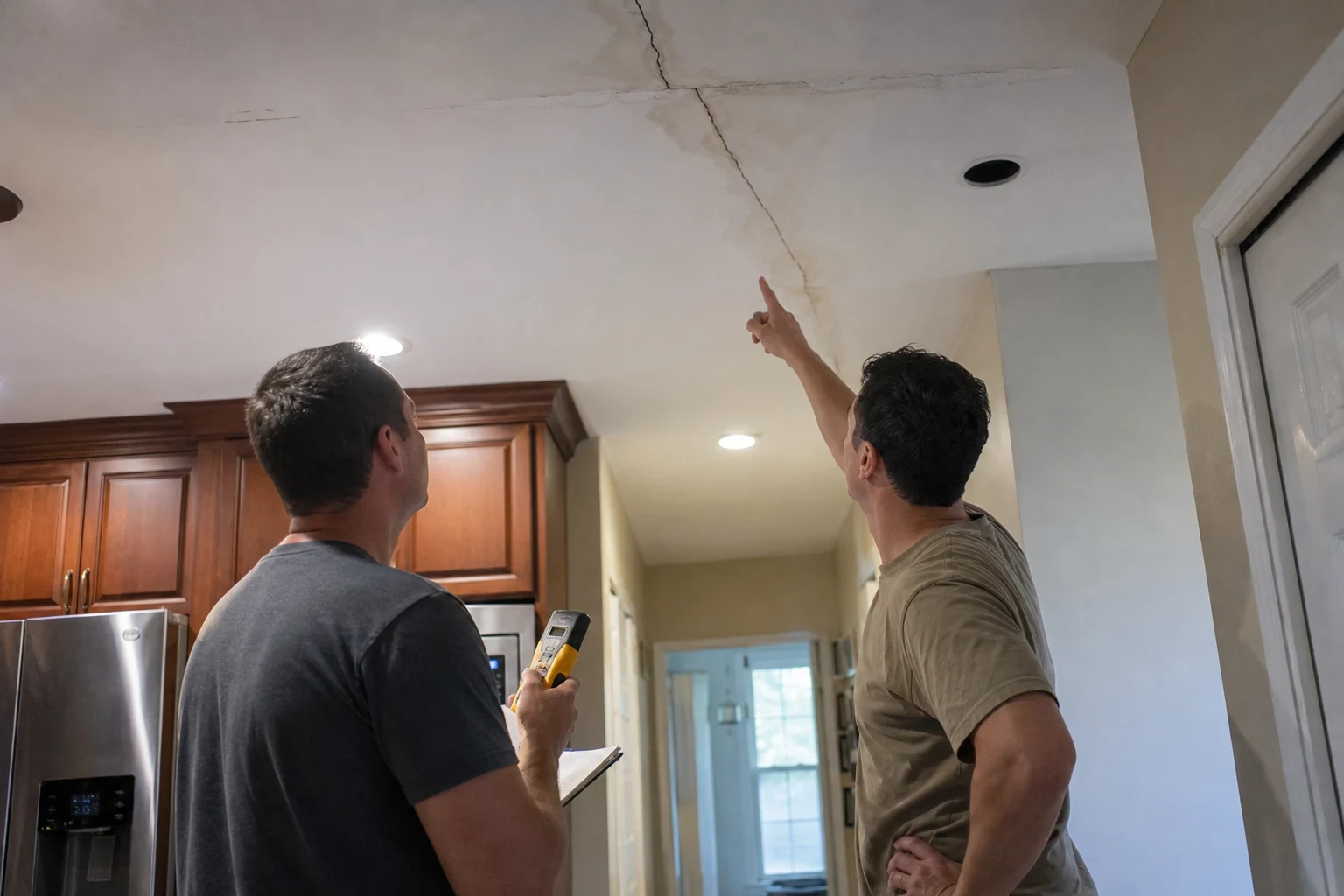
What sets the cost of finishing
We price finishing by the surface area, the finish level and the room conditions. All of those factors are spelled out in your written quote before we begin, so the price you approve stays the price unless you change the scope.
- Level of finish
- Compared with Level 4, Level 5 adds one full coat over the whole surface and extra sanding. That labor shows up as a separate line.
- Room size and shape
- Long, plain walls move faster than rooms full of outside corners, window returns and soffits, since each of those takes bead and added coats.
- Ceilings and tall spaces
- Work overhead and in tall stairwells calls for planks or scaffolding and takes more time per square foot.
- State of earlier work
- Taking over from another crew may mean removing failed tape or resetting fasteners before we apply any new compound.
- Room conditions for drying
- A cold room or humid summer air stretches drying time between coats and can mean one more visit. We build that into the schedule from the start.
Questions about drywall finishing
Something not covered here? (718) 571-8361
How long does a finishing job last?
Expect three to four visits for most rooms, since every coat must dry before the next one. Deep fills can go faster with setting compound. The written scope states how many visits we expect.
Is Level 5 necessary?
It depends. Most rooms painted in flat or eggshell do fine at Level 4. Level 5 is worth it under shinier paint, in strong window light or on walls viewed from a steep angle. We walk you through the difference before you decide.
How dusty does it get?
Sanding throws off fine dust, so we seal the doorways, cover the floors and vacuum while we work and when we finish. Some dust may settle close by, but we leave the room clean.
Will you finish board another crew hung?
Yes. We first look for loose fasteners, wide gaps and torn paper, and we put anything that needs fixing before finishing in writing so it does not surprise you later.
Is painting part of finishing?
The walls are left sanded and ready to prime. When small areas need to match the existing paint, paint touch-ups are available as their own line item.
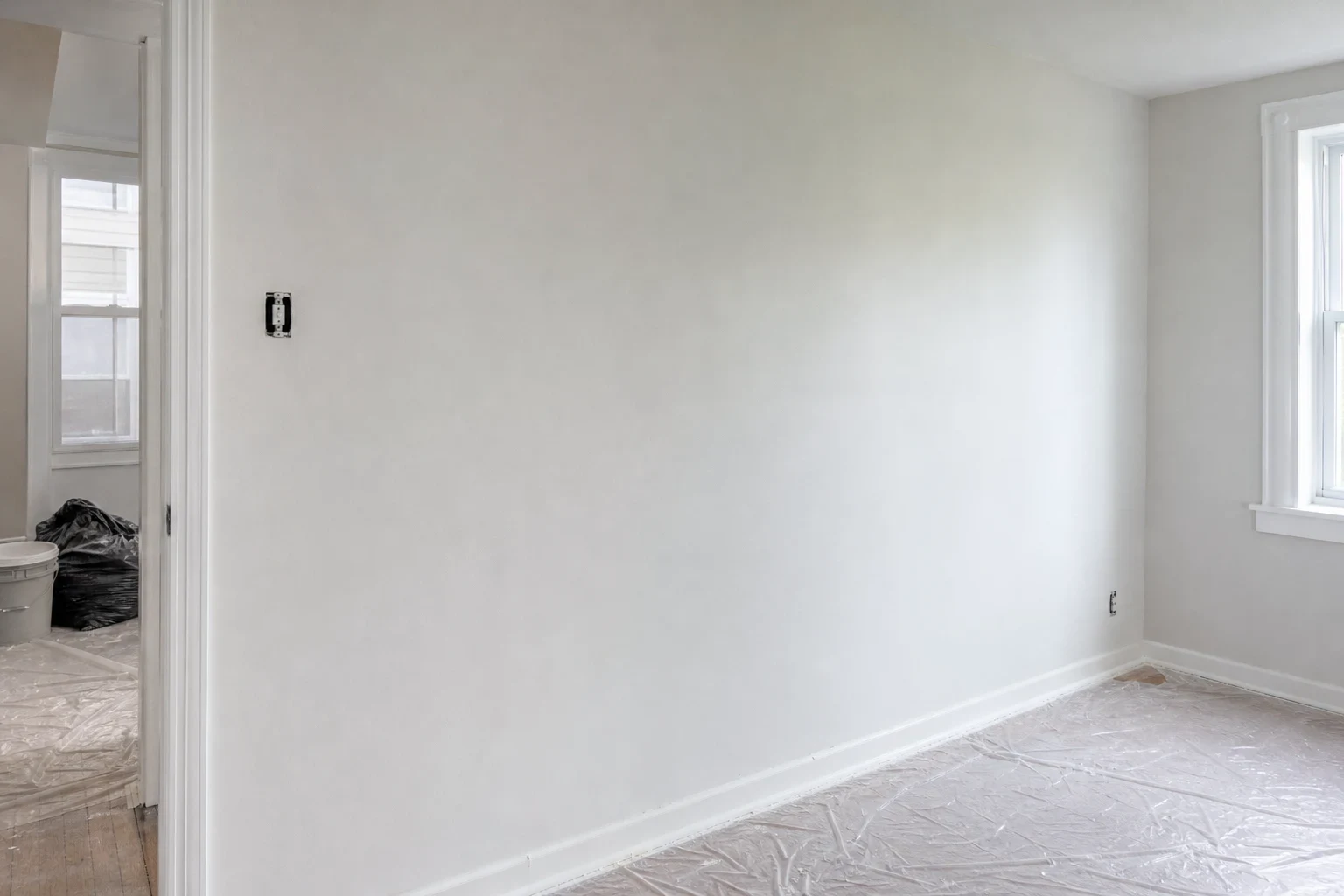
Ready for walls with no visible seams?
Tell us about the rooms, the board and the paint you plan to use. We'll explain the right finish level and put the scope in writing before work starts.