ServicesPaint Touch-Ups
Paint Touch-Ups in Brooklyn
A drywall patch is only half done until the paint over it disappears. We spot prime, match your color and sheen, and feather the edges so the repair doesn't flash in raking light. You get the scope and price in writing before we open a can.
When a touch-up is the right call
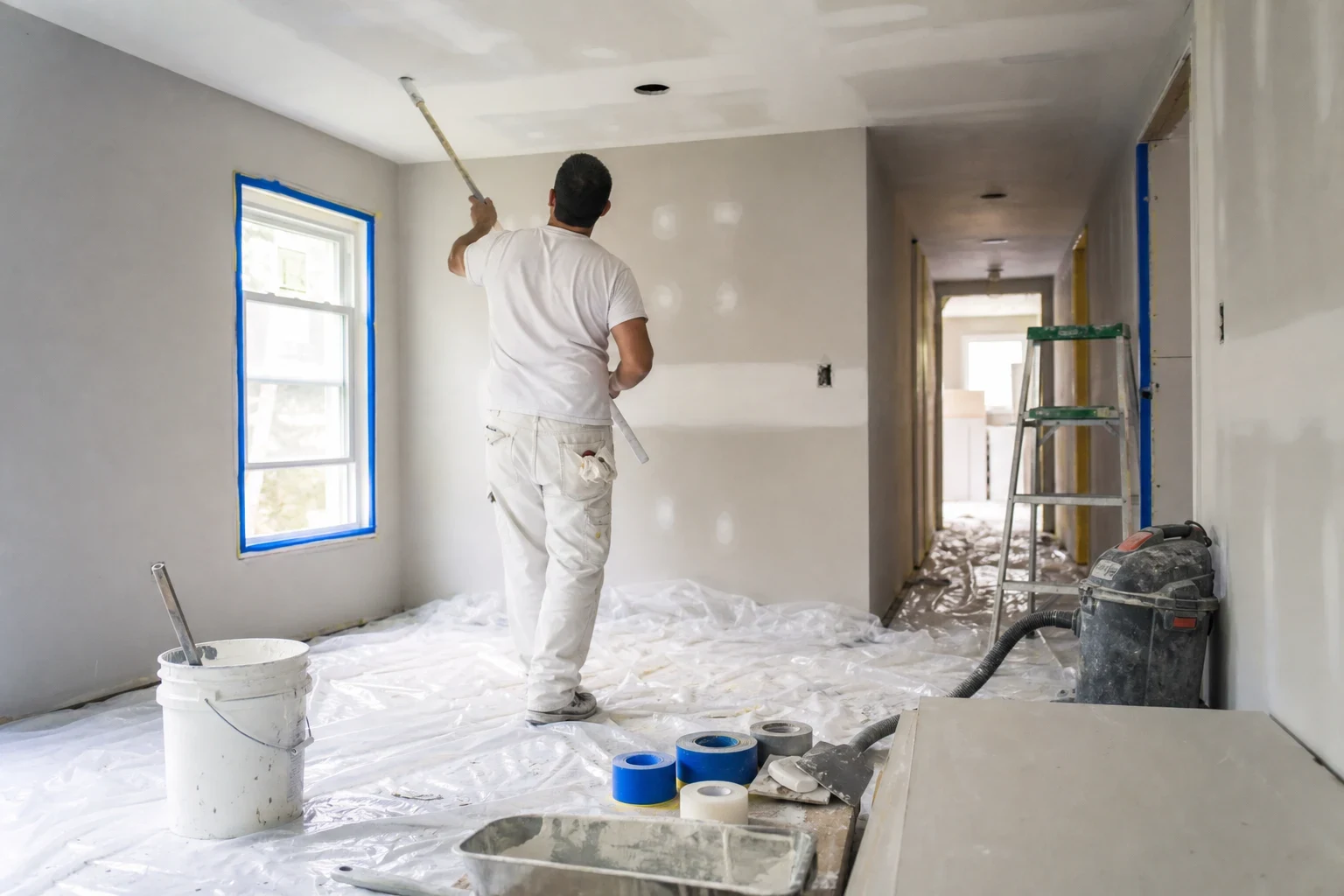
Touch-ups are for small, contained spots: a new patch, a scuffed corner in a hallway, a stain overhead, a hole left by a picture hook. They make sense when the wall around the spot is still in fair shape and its paint can be matched. On a wall that has faded unevenly or collected years of grime, fresh paint will stand out brighter than the rest, so a touch-up is the wrong fix.
Color is rarely the real problem. Sheen and absorbency are. Bare joint compound drinks paint faster than the painted surface beside it, so a patch left unprimed dries flatter and shows a halo. Eggshell and satin make it worse, since any gloss difference picks up light from a window. We prime first, then carry the finish coat out beyond the patch so there is no edge to see.
You hear from us in writing, before work starts, whether a touch-up will blend or whether the wall is past that point. If it won't blend, we say so at the start, not once the paint has dried.
What our touch-up work includes
- Matching color and sheen
- If you have leftover paint with a label we can read, we work from that. Otherwise we have a sample matched and compare it to the wall in daylight before it goes on the repair.
- Priming each spot
- Fresh joint compound always gets primer before color. Marker and water stains get a stain-blocking primer so they can't bleed up through the finish coat.
- Feathered edges
- Paint is rolled or brushed beyond the repair and thinned out at the edge so no hard line forms. We pick a roller nap that matches the stipple on the wall.
- Hand cutting at edges
- Where a touch-up runs up to a ceiling line, trim edge or outlet plate, we cut it in by hand to keep the line straight.
- A clean work area
- Drop cloths go down, furniture nearby is covered or moved, and our rags and empty containers leave with us.
Signs a spot needs a paint touch-up
A flat ring around a patch
A repair that looks flatter than the surrounding wall was probably painted with no primer underneath. The compound absorbed the paint and the sheen went with it.
Marks that scrubbing won't remove
Bags, door handles and chair backs mark up hallways and stairwells. Once scrubbing starts polishing the paint, a touch-up looks better than another round of scrubbing.
Leftover water stains
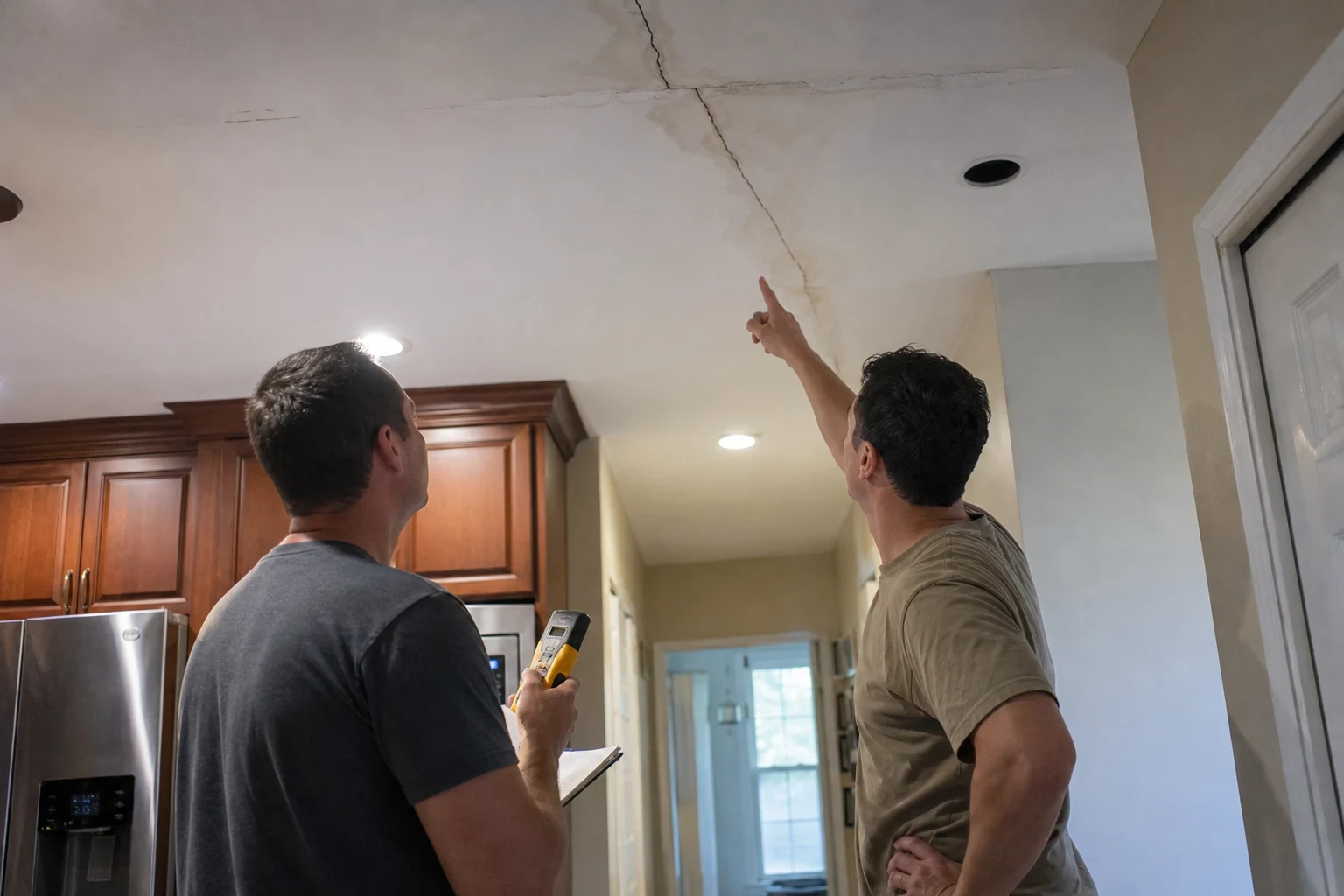
A brown ring overhead shows through regular paint. After the leak is fixed and the drywall has dried, it needs stain-blocking primer and a new coat.
Screw holes and nail pops
Small pops are set, filled and sanded, and the spot still needs matching paint. Skip that last step and the fill shows as a white dot.
Spots that flash in side light
Some touch-ups look fine straight on but turn shiny or dull when light crosses the wall at an angle. That usually means the sheen or the way the paint was applied didn't match.
What moves the price of a touch-up
Touch-up pricing depends more on how many separate spots there are and what each one needs than on square footage. A dozen nail holes across three rooms takes more setup than one larger patch. Every factor below is written into your quote before work starts, so the number you approve is the number you pay.
Number and spread of spots
Each separate area means moving drop cloths, ladders and furniture. Grouping spots in one room keeps the job shorter.
Paint matching
Having your original paint with a readable label saves time. Matching from a sample takes a trip and a test application.
Stains and primer type
Water stains, smoke marks and marker need a stain-blocking primer and extra dry time before the color coat.
Repairs underneath
If holes, cracks or loose tape have to be fixed before painting, that drywall work is priced as its own line so you can see it.
Height and access
Ceilings, stairwells and high walls need ladders or planks and take longer to set up safely.
How a touch-up visit runs
- 1
Inspect and write up the scope
We look at the areas, check the existing paint for sheen and condition, and note any repairs that have to happen first. You get a written quote that lists each spot and what it needs.
- 2
Prep the surface
We clean the area, lightly sand any ridges or old drips, and fill dents and holes. Larger damage goes through our drywall patching work before any paint goes on.
- 3
Prime
Fresh compound and stained areas get the right primer and enough time to dry. Rushing this step is the most common reason touch-ups show.
- 4
Apply and feather
We apply color with the same tool type the wall was painted with and feather it out. Then we check the result from several angles, including with side light.
- 5
Clean up and walk through
Drop cloths come up, furniture goes back, and we go over each spot with you before we leave.
Common questions about touch-ups
Will the touched-up spot be visible?
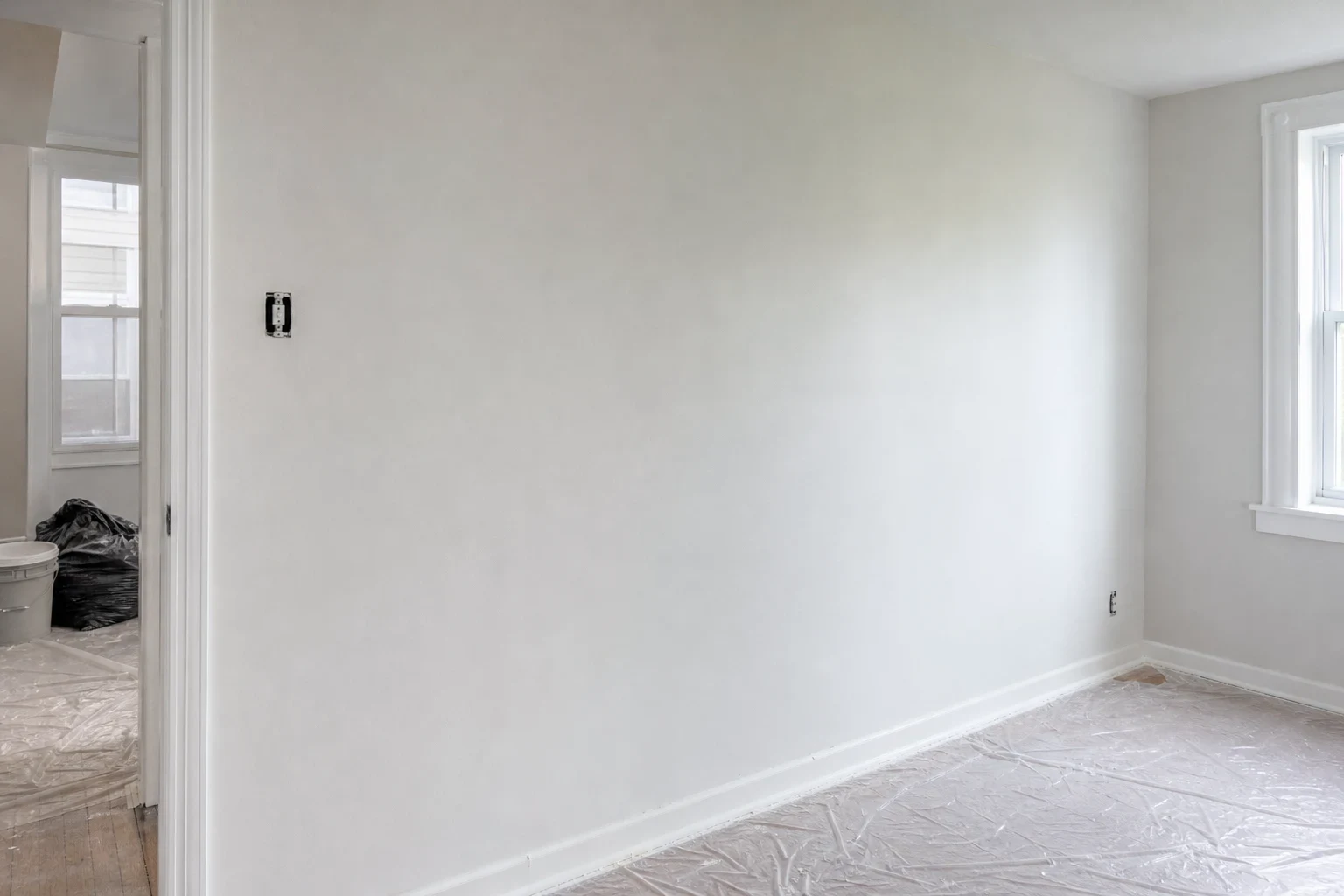
When the paint is matched, the primer is right and the wall is sound, it should vanish in normal light. Older paint fades and yellows, especially on ceilings and in sunny rooms, so fresh paint can stand out. If we think a spot won't blend, we tell you in writing before you approve.
We no longer have the original paint. Can you match it?
Usually, yes. We match from a small sample or the wall itself, test the color next to the repair or somewhere hidden and let it dry before continuing. Paint shifts as it dries, so we judge the match only after it has.
Why does a past touch-up look shinier or flatter than the wall?
Most often the patch was never primed, so the compound soaked up paint unevenly. A mismatched sheen or roller nap causes the same look. We fix it by priming and repainting in the right sheen out to a natural break.
Can you cover ceiling stains?
Yes, once the water source is repaired and the drywall is fully dry. A stain-blocking primer seals the stain and then we paint. Soft or sagging drywall needs ceiling repair first, listed as a separate line on your quote.
How soon can we use the room?
Most touch-ups are dry to the touch in a few hours. Primer must dry fully before color goes on, so visits with stain blocking take longer. You can use the room when we leave, but avoid washing or bumping the painted spots for a few days while they cure.
Get the patch to stop showing
Tell us how many spots you have and what caused them. We'll set up a visit and give you a written scope and price that lists each one before any work starts.