ServicesDrywall Patching
Drywall Patching in Brooklyn
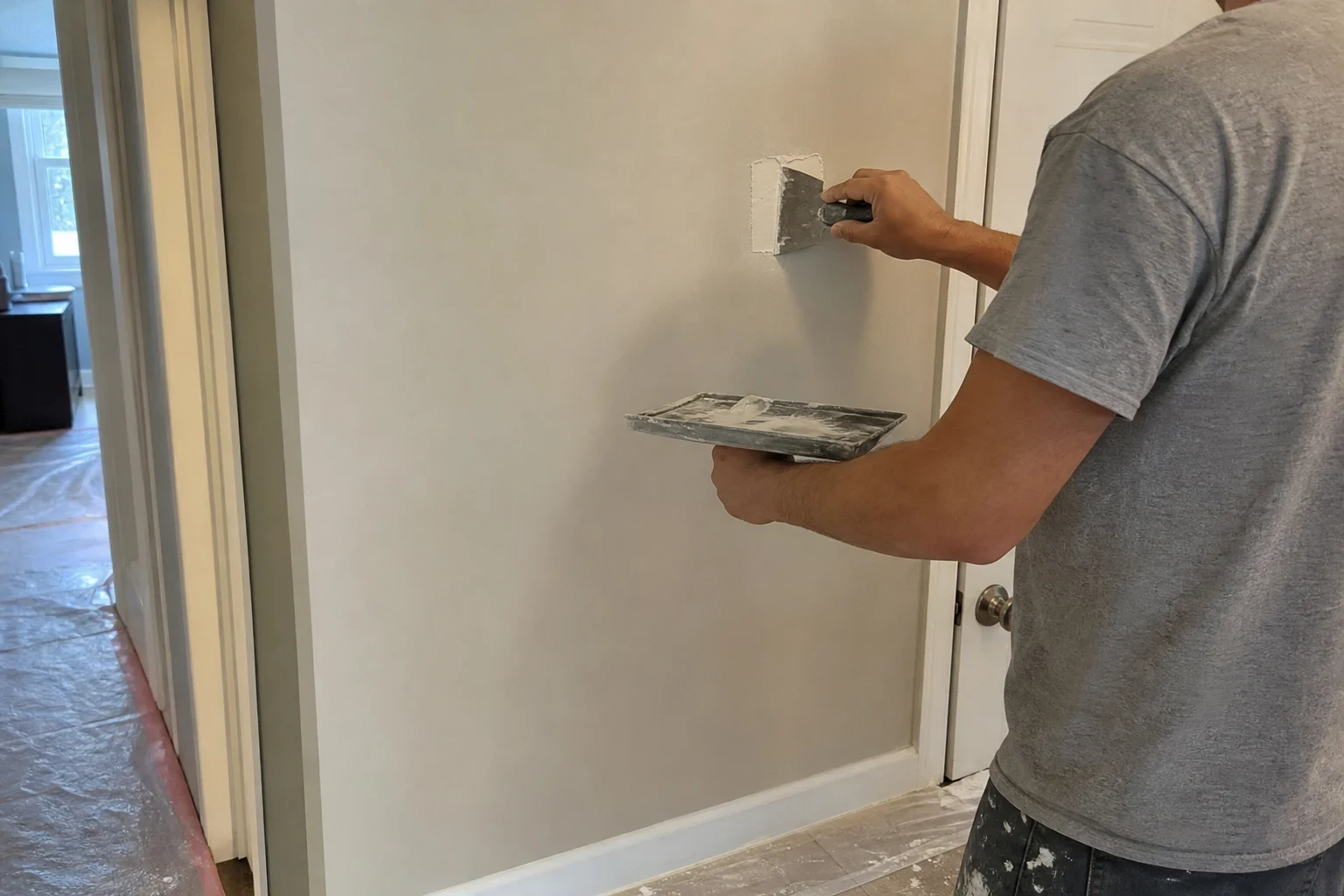
We patch the holes, dents and cut-outs that break the face of your drywall, then feather, sand and prime them so they sit flush with the wall. Before we start, you get a written list of every patch, the method for each and what moves the price.
When a Patch Is the Right Fix
Patching is for damage confined to a small area. Think of a doorknob punched through the paper face, holes left after a TV mount comes down, an electrician's access cut-out or a dent from moving a dresser. We cut the broken gypsum back to clean, solid edges, close the opening with mesh or a new piece of board, tape it and build up joint compound until the repair is level with the surrounding surface.
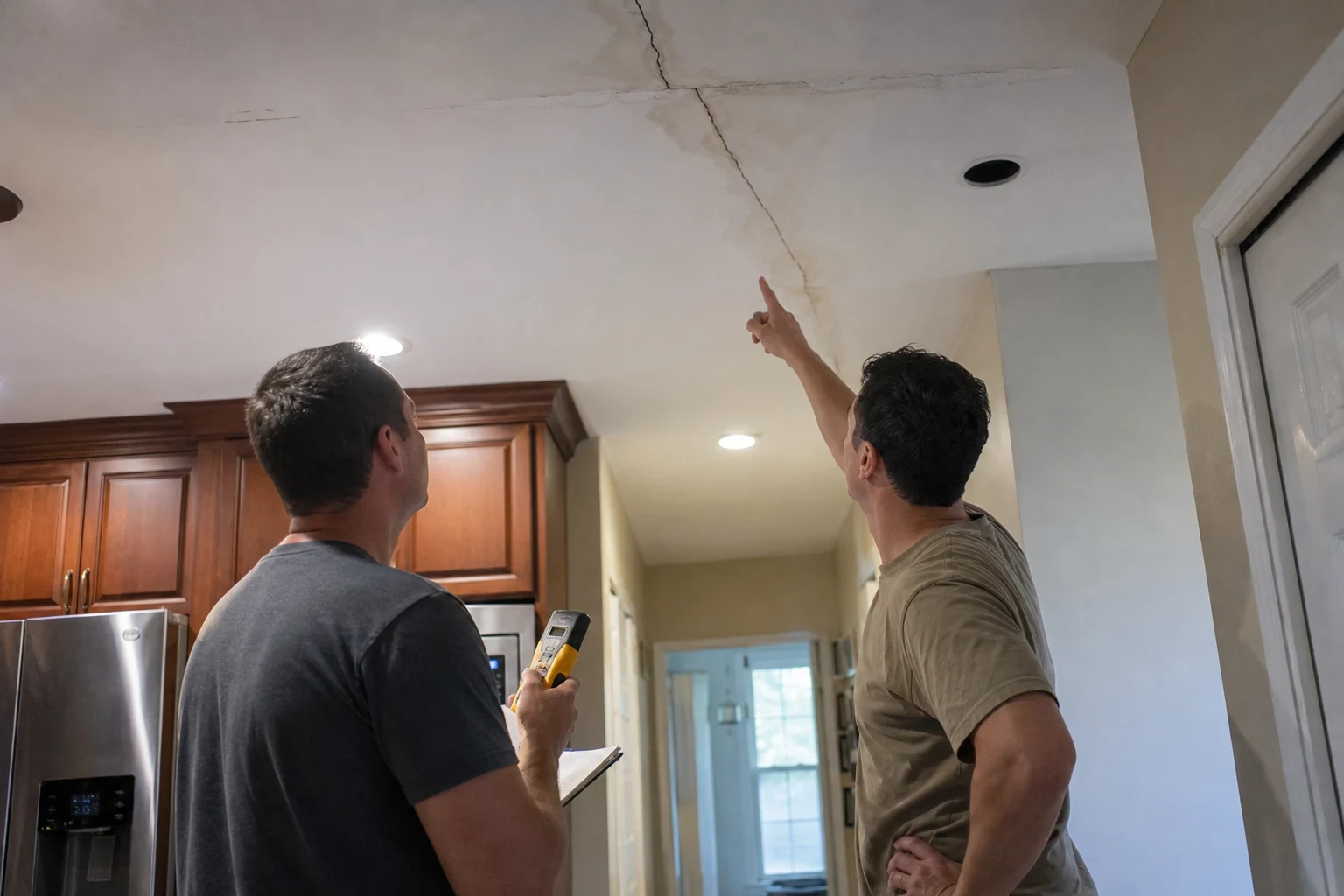
A patch will not hold when the board itself has failed. Gypsum softened by a leak, cracks running across a ceiling or a sheet pulling off its fasteners call for drywall repair or ceiling repair, and we will tell you that rather than skim over a weak spot.
Many older Brooklyn buildings have plaster over lath, or a mix of plaster and later drywall. We check what your wall is made of before pricing the job, because it changes the backing, the thickness of the fill and how the edges are blended.
What a Patching Job Includes
- Fastener holes and nail pops
- Screw and anchor holes get filled. For a popped nail, we set a drywall screw an inch or two away to draw the board in tight, then sink the nail and cover both spots.
- Mesh and paper-face patches
- Openings up to a few inches are closed with a self-adhesive fiberglass mesh patch or a paper-face patch, which uses the board's own face paper in place of tape. Either way the repair stays thin and doesn't bulge.
- Cut-in patches with backing
- Bigger holes are squared off, wood backers are screwed in behind the edges and a new piece the same thickness as the wall, typically 1/2 inch or 5/8 inch, is fastened in. Its seams get taped like any joint.
- Three coats, feathered wide
- Setting-type compound goes on first because it cures chemically and shrinks less than premixed mud. Lighter topping coats come next, spread well beyond the patch so paint shows no ridge.
- Texture matching
- When the wall carries orange peel, knockdown or a slightly rough plaster skim, we recreate that finish over the patch so it doesn't stand out as a smooth square.
- Primer and paint touch-up
- Raw compound takes paint differently than the rest of the wall, so each patch is primed. Then comes a paint touch-up with your leftover paint or a matched color.
Signs Your Wall Needs a Patch
A hole behind the door
A missing or broken door stop lets the knob hit the same spot until it breaks through. We patch the hole and can point out where a stop would prevent a repeat.
Damage left by mounts and shelves
Toggle bolts and anchors pulled out of drywall leave torn paper and crumbled gypsum that spackle alone will not bridge.
Rows of small round bumps
Nail pops line up along the studs. They come from framing lumber shrinking and dry radiator heat in winter moving the board against its fasteners.
Open access cut-outs
After wiring or other work inside a wall, the opening is often left raw or covered with a loose piece. It needs backing and tape to stay closed.
An old patch that shows
A previous repair that is cracked around the edges, sunken or bulging usually had no backing or was filled with lightweight spackle that shrank.
What Sets the Price of a Patch
Patching is priced by the work each hole needs, not by a flat rate per visit. Your written estimate shows every factor below for your specific walls, so the number you approve is the number you pay unless you add work.
Number and size of holes
A handful of anchor holes takes minutes, while a hole wide enough to need a cut-in piece and backing takes hours and more drying time.
Wall material
Plaster, plaster over lath and 5/8 inch fire-rated board each need different fill and backing than standard 1/2 inch drywall.
Texture and finish level
Matching knockdown or orange peel adds a step. Very smooth walls under gloss paint need extra skim coats because every flaw shows.
Paint touch-up
Using paint you already have is simpler than color matching. Faded or sheen-mismatched paint can make a touch-up visible, and we note that in writing up front.
Access and height
Patches high in a stairwell, on a ceiling or behind heavy furniture take more setup and time.
How a Patching Job Runs
- 1
Look and measure
After your call we look at each damaged spot, measure it and note the wall material, the texture and whether there is paint on hand.
- 2
Your written quote
Each patch is listed with its size, method, number of coats, texture work and touch-up. Nothing outside that list is added without your sign-off.
- 3
Protect the room
We lay drop cloths, cover nearby furniture with plastic and use a sander connected to a vacuum to keep a clean work area.
- 4
Patch and let it cure
Setting compound lets us apply several coats on small patches in one visit. Larger cut-ins may need a second day for drying, and the written estimate says how many visits to expect.
- 5
Sand, prime, finish
Final sanding is checked with a light held flat against the wall to show any edge, then primer and touch-up go on and we vacuum before leaving.
Common Questions About Patching
Will the patched spot be noticeable?
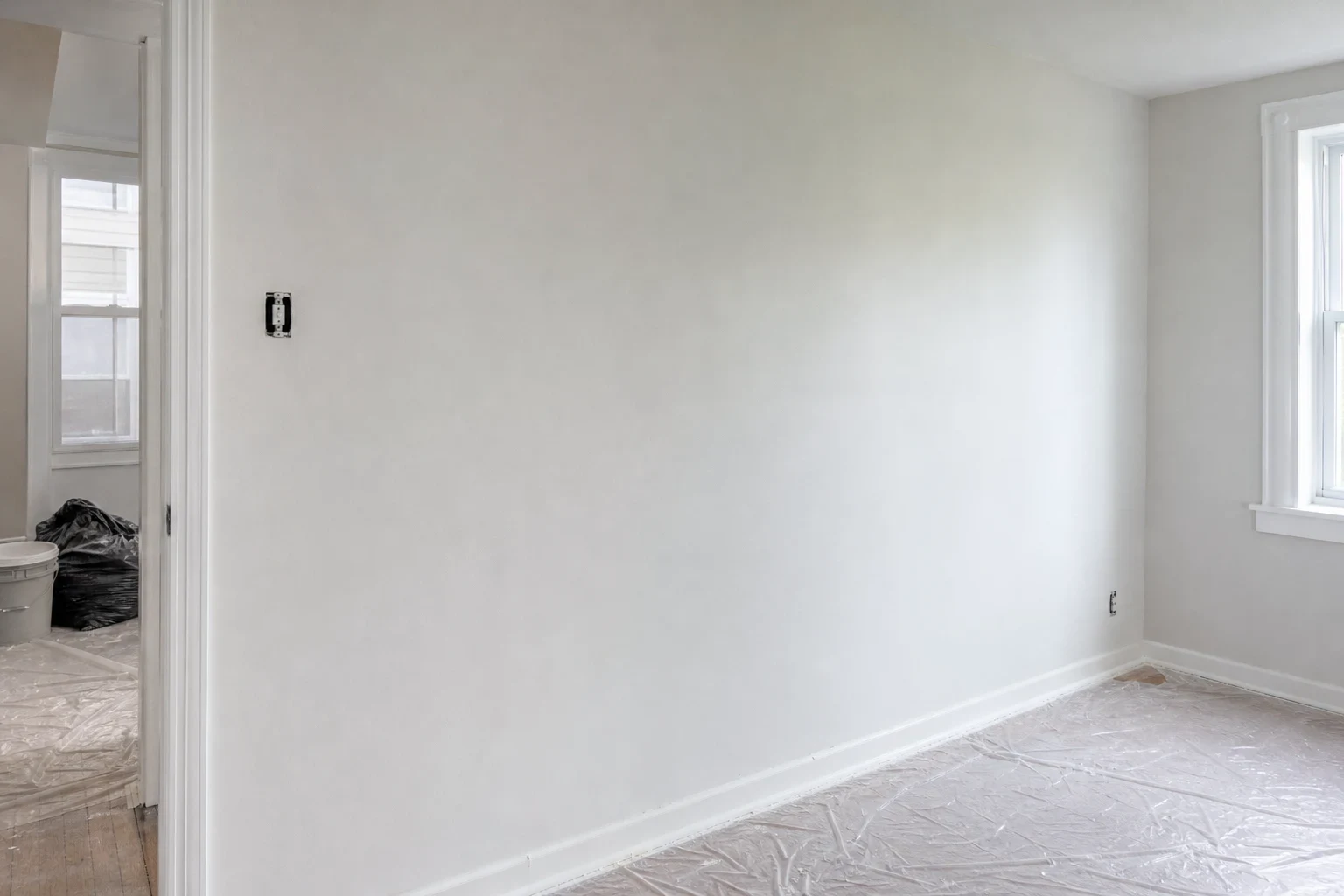
Usually not, once the patch is feathered, primed and textured. Paint is the one catch: faded wall color or a different sheen can make a touch-up visible under side light, and we let you know ahead of time when that may happen.
How much time does a patch need?
With setting compound, nail pops and small holes are often done in a single visit. Bigger cut-in patches can need a return trip once the compound has fully dried. The estimate states how many visits to plan for.
Is my apartment going to be covered in dust?
Sanding does create fine dust, so we sand with a vacuum-connected sander, cover your furniture and wall off the work area with plastic. Floors and surfaces get vacuumed before we go.
When is replacing a full sheet better than patching?
Damage wider than roughly a foot, board softened by water or a cluster of holes close together all make a replaced section the stronger fix. We tell you which case you have and put the price in writing first.
Do you patch plaster as well?
We do. Plaster gets different backing and fill than drywall, and we build the patch up to the plaster's full thickness so it sits flush and its edges don't crack.
Get Every Patch Listed Before We Start
Tell us how many holes you have and where they are. We will look at them, write out the method and price factors for each, and you decide from there.