ServicesDrywall Repair
Drywall Repair in Brooklyn
Cracked seams, popped screws, doorknob holes and soft, stained board after a leak. We find what caused the damage, repair the drywall back to a flat, sound surface and put the full scope in writing before we pick up a knife.
What drywall repair covers and when it fits
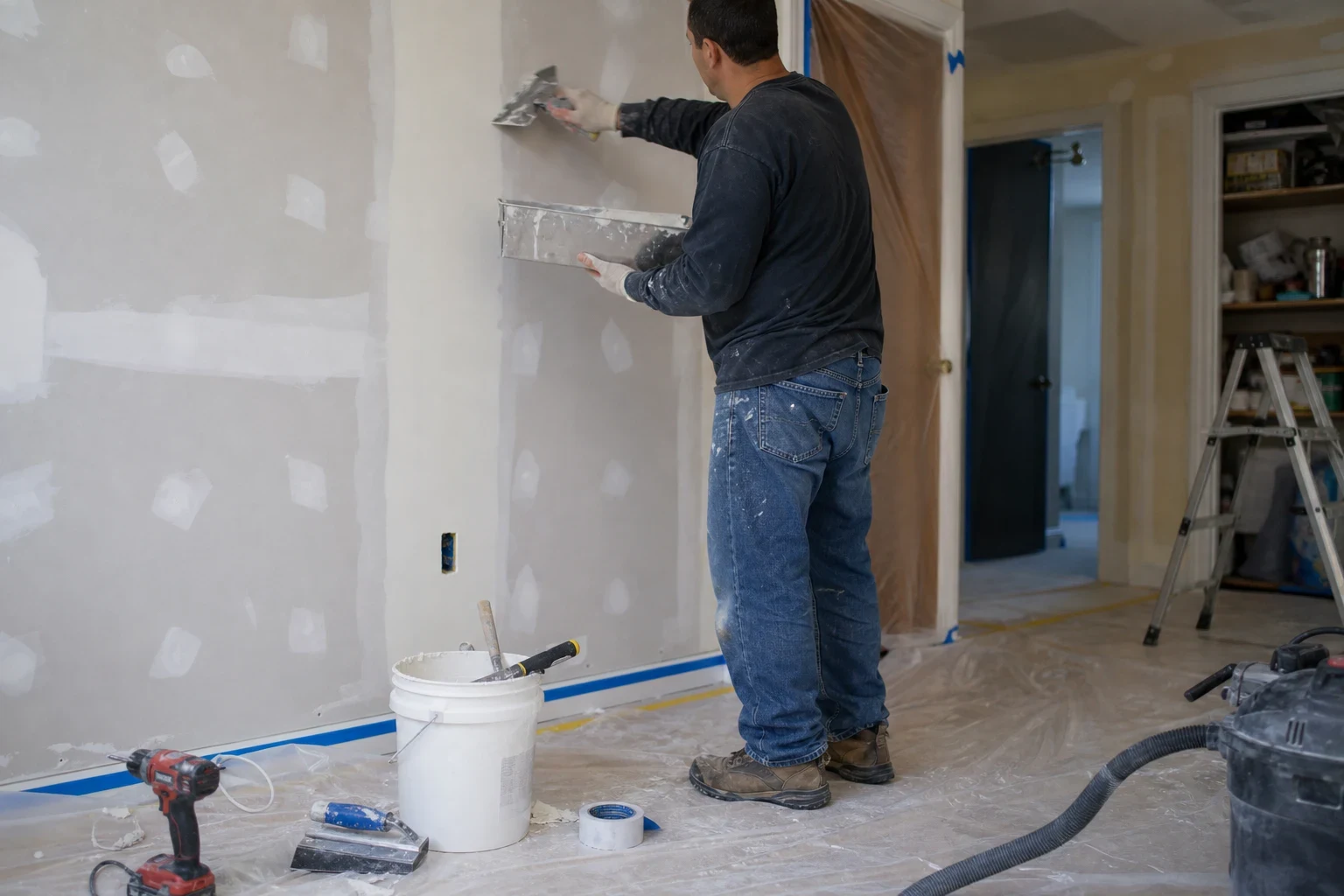
Drywall repair is the right call when the board itself is damaged but the framing behind it is sound. That covers dents and holes, cracked or peeling tape joints, bulging screw heads, crushed outside corners and sections of board ruined by water. If a wall has failed over a large area or the studs need work, the job moves toward drywall hanging instead, and we will tell you that up front.
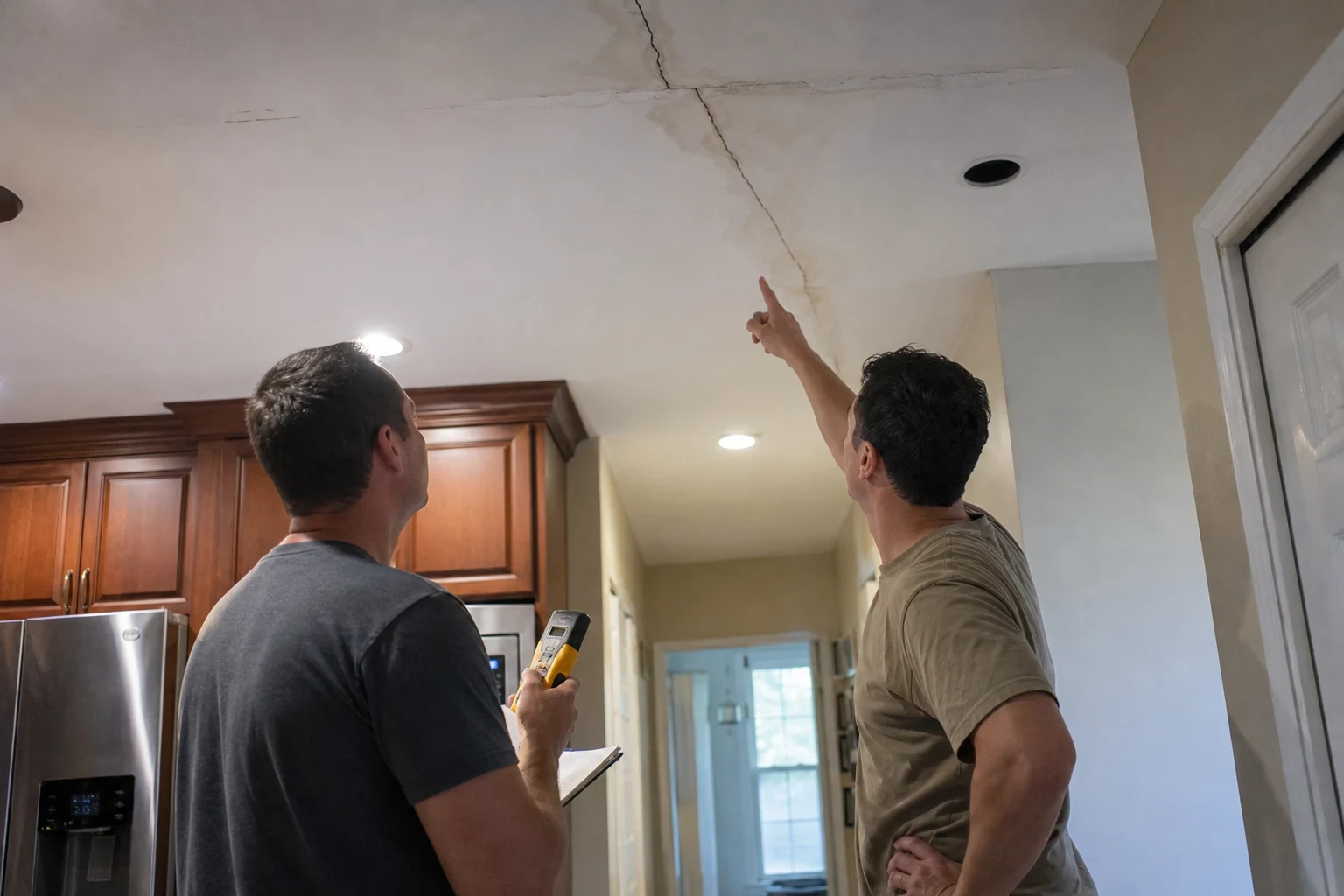
Most damage has a cause worth naming. A crack running diagonally from a door corner usually means the joint was placed right at the header, where the framing flexes. Tape that lifts in long strips often went on with too little compound underneath. We repair the symptom and explain the cause, so you know whether it is likely to come back.
Before we start, you get a written scope listing each area, the method and what affects the price. Nothing gets added once we are on site unless you approve it first.
What the work includes
- 01
Cutting out damaged board
We score and remove the damaged gypsum back to a clean, square opening. Soft or crumbling edges will not hold a patch, so they come out rather than getting buried under compound.
- 02
Backing and new board
Larger openings get wood or metal backing cleats screwed behind the edges, then a new piece of board matched to the existing thickness, usually 1/2 inch on walls and 5/8 inch where fire-rated board was used.
- 03
Taping and setting compound
We embed paper or fiberglass mesh tape and use setting-type compound for the first coats because it cures by chemical reaction and shrinks less than premixed mud. Lighter all-purpose compound goes on for the final skim.
- 04
Corner bead and screw pops
Dented metal or vinyl corner bead is cut out and replaced. Popped fasteners are backed out, the board is pulled tight with a new screw beside the old one, and the spot is filled.
- 05
Sanding and texture matching
Each coat is feathered wider than the last, then sanded smooth. Where your wall has orange peel or a light knockdown, we match the texture so the repair does not read as a flat spot.
- 06
Clean work area
Floors and furniture near the repair are covered, and we use sanding methods that keep dust down. The area is vacuumed before we leave, ready for primer or a paint touch-up.
Questions about Drywall Repair?
Call(718) 571-8361Signs your drywall needs repair
Cracks at door and window corners
Diagonal cracks from the corners of openings point to movement at a seam. Filling them with caulk or spackle rarely lasts; the joint needs to be opened, re-taped and refinished.
Round bumps in rows
Small circles lifting the paint along a stud line are nail or screw pops. They happen when framing lumber dries and shrinks and the fastener loses its grip on the board.
Stains or soft board after a leak
Gypsum that stayed wet loses strength and can grow mold on its paper face. Once the source is fixed and the cavity has dried, the affected board should be cut out, not painted over.
Holes and crushed corners
A doorknob, a moved dresser or a removed TV mount leaves damage too large for spackle alone. These need backing or a proper patch to stay flat.
Tape lines showing through paint
Visible or bubbling tape means the joint was under-filled when it was first finished. It gets worse with each seasonal swing in humidity.
How a repair day runs
- 1
Look and measure
We check each damaged area, press on suspect board for softness and look for the cause. You describe what happened, and we note anything that needs another trade first.
- 2
Written scope before work
The scope lists each repair, the method, the number of visits and the factors behind the price. Work starts only after you have read it and agreed.
- 3
Prep and repair
We protect the floor and nearby surfaces, cut out the damage, install backing and new board, then tape and apply the first coat of setting compound.
- 4
Finish coats and sanding
Follow-up coats are applied once the previous one has cured. Most repairs need two or three coats, so plan on more than one visit for anything beyond a small fix.
- 5
Walkthrough and cleanup
We check the surface with a work light held flat to the wall, which shows ridges the eye misses. Then we clean up and leave the wall ready for primer.
What moves the price of drywall repair
Drywall repair is priced by the work each area actually needs, not by a guess. Your quote lists every repair and names the factors below, so you can see why one wall costs more than another. If we find something unexpected after opening the wall, we stop and show you before changing the scope.
- Size and number of areas
- One large opening often takes less time than several small ones spread across rooms, because each spot still needs its own setup, coats and sanding.
- Condition behind the board
- Wet insulation, damaged studs or old patches layered over each other add steps. We note these on the quote as soon as we see them.
- Texture and finish level
- A smooth wall under strong window light needs a finer finish than a textured hallway. Matching an existing knockdown or orange peel adds time.
- Ceilings and access
- Overhead work, high stairwells and rooms full of furniture take longer to set up and protect. Tall walls in prewar layouts may need scaffolding or a taller ladder.
- Number of visits
- Each coat of compound has to cure. Larger repairs mean more return trips, and the quote states how many we expect.
Drywall repair questions
Can you repair water-damaged drywall, or does it all need replacing?
Usually only the damaged section needs replacing. We cut back to dry, firm board, which is often a foot or so past the visible stain. The leak has to be fixed and the cavity dried first, or the new board will fail the same way.
Will the repair show after painting?
A properly feathered and sanded repair should not show once it is primed and painted. The usual giveaways are skipping primer, which makes the compound absorb paint differently, or not matching the wall texture. We cover both in the scope.
Why do my nail pops keep coming back?
Hammering the nail back in does not fix it, because the nail still has a loose grip. We drive a drywall screw next to it to pull the board tight to the stud, then remove or sink the old fastener and fill both.
How long does a typical repair take?
A small repair with setting compound can sometimes be finished in one visit. Larger openings and cracked seams usually need two or three visits so each coat can cure before the next goes on. Your quote states the expected number of visits.
What is the difference between drywall repair and drywall patching?
Drywall patching covers individual holes and dents. Drywall repair is broader and includes seams, corners, fasteners and water-damaged sections. If a whole room needs new board, that is drywall hanging.
Get the damage scoped before any work starts
Tell us what you are seeing and where. We will set up a visit, look at the walls and give you a written scope with every price factor named.